
Member Spotlight • May 2026
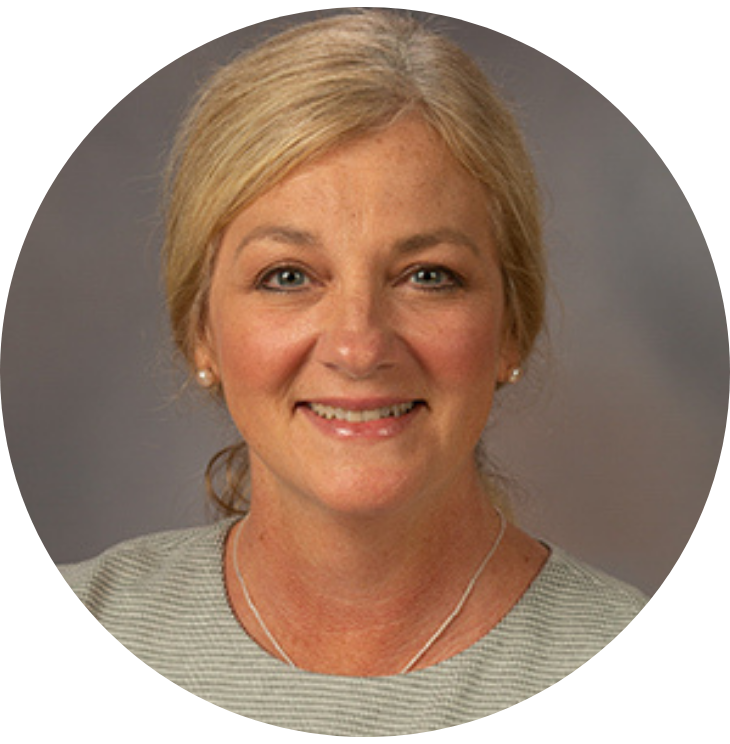
Location: Mississippi, USA
Institution: University of Mississippi Medical Center
Role: Chair, Department of Pharmacology and Toxicology; Director, Mississippi Pre-Eclampsia Collaborative Center; Co-Director, Mississippi Perinatal Research Center
ISSHP Role: Secretary
About Birdie “Babbette” LaMarca
For more than two decades, Dr. Babbette LaMarca has dedicated her career to understanding the mechanisms underlying hypertension during pregnancy and preeclampsia. Based at the University of Mississippi Medical Center in Jackson, Mississippi, she serves as Chair of the Department of Pharmacology and Toxicology while continuing to mentor Maternal-Fetal Medicine fellows and lead multiple research initiatives focused on hypertensive disorders of pregnancy.
Although she jokes that she has had “a pretty unexciting career trajectory,” her journey reflects a deep commitment to mentorship, collaboration, and scientific discovery.
Through her research, leadership, and service to ISSHP, Dr. LaMarca continues to help shape the future of the field while supporting the next generation of scientists and clinicians.
Research Focus
Autoantibodies. Lymphocytes. Hypertension.
Click each question to expand.
How did you first become interested in hypertension in pregnancy?
Dr. LaMarca began her scientific training in microbiology and immunology, completing her PhD at UMMC before joining Dr. Joey Granger’s laboratory for postdoctoral training in physiology.
At the time, Dr. Granger had recently begun investigating the inflammatory mechanisms involved in preeclampsia. For Dr. LaMarca, the connection between her immunology background and the emerging field of hypertension in pregnancy felt natural.
“A lot of mechanisms are pretty similar between infectious disease and the host response and what we have in women with preeclampsia.”
Following her postdoctoral training, she joined the Department of Obstetrics and Gynecology, where she became Director of Basic Science Research and helped oversee the Maternal-Fetal Medicine Fellowship Program. She later returned to the Department of Pharmacology while maintaining close collaborations with clinicians and fellows.
What kept you at UMMC for so many years?
For Dr. LaMarca, the answer comes back to mentorship and the excitement of clinically relevant science.
“When I met Dr. Granger, the project was so exciting and clinically relevant. I felt like I could learn so much from him. It just seemed to me to be where I was supposed to go—where I was meant to be.”
That sense of purpose has shaped a career rooted in collaboration, mentorship, and advancing research that can improve outcomes for women and babies.
What are you currently working on, and what questions excite you most?
One area that particularly excites Dr. LaMarca is a T-cell adoptive transfer model developed by her team. Using immune cells isolated from placentas collected after delivery, researchers transfer T and B lymphocytes into pregnant rats.
Remarkably, these animals develop a disease profile that closely resembles preeclampsia, including hypertension, fetal growth restriction, chronic inflammation, and changes in cerebral blood flow.
“We’re now studying these rats several months postpartum, and interestingly, they still have increases in blood pressure.”
The findings have led her team to ask new questions about how immune memory may contribute to the long-term cardiovascular and neurological risks observed in women who have experienced preeclampsia.
“Are those T cells staying activated because they always see the antigen? Or are they simply programmed to remain activated even though the antigen may be gone?”
How has the field evolved during your career?
Dr. LaMarca has witnessed significant changes in how researchers and clinicians approach hypertensive disorders of pregnancy.
One of the most important shifts, she believes, has been the growing acceptance of animal models as valuable tools for understanding disease mechanisms.
“When I first started in this area 22 years ago, there was a very negative mindset around animal models.”
She has also observed a change in clinical culture. Years ago, many believed preeclampsia had largely been addressed through antihypertensives and magnesium sulfate.
“That’s not working. We don’t have all the answers.”
She is encouraged by a new generation of physician-scientists who are eager to bridge clinical observations with research questions.
What does being part of ISSHP mean to you?
As someone involved in multiple professional societies, Dr. LaMarca values ISSHP for its unique ability to bring together researchers and clinicians around a common goal.
“This one is really driven by research in hypertension during pregnancy.”
Whether members are working with cell lines, animal models, clinical populations, or public health data, she sees a shared mission throughout the society.
“We’re all kind of working together for the same outcome—to find a better treatment for these women so women and babies can have better outcomes.”
That collaborative spirit is what keeps her engaged with the organization and motivated in her role as ISSHP Secretary.
Advice for young clinicians and researchers?
Dr. LaMarca emphasizes rigor, trusted mentorship, and thoughtful collaboration.
“Scrutinize your own research. Ask your question, do your experiment, and then do it again. Make sure you have the data right.”
She also encourages young scientists to build a trusted circle of mentors and collaborators who can provide honest feedback and guidance throughout their careers.
One memorable piece of advice came from longtime collaborator Dr. Ralph Dechend:
“Don’t collaborate with people you don’t want to sit down and have a beer with.”
Laughing, she admitted that she has followed that advice throughout her career: “I think it has served me well.”
What continues to motivate you?
After more than twenty years in the field, Dr. LaMarca says her motivation comes from the trainees.
“I think it’s the trainees.”
She lights up when talking about students and fellows presenting their research, giving talks, and experiencing those moments when complex scientific concepts suddenly click.
“I love to see them succeed.”
For Dr. LaMarca, helping the next generation develop confidence as researchers and leaders is among the most rewarding aspects of her work.
Outside of work…
Outside of research and leadership responsibilities, Dr. LaMarca enjoys spending time with her family, including her children and grandchildren.
She also finds peace in simple routines: running in the early morning, listening to birds as the sun rises, visiting the beach, swimming, and spending time with her dogs.
“It gives me some self-satisfaction.”
After more than two decades of advancing our understanding of hypertensive disorders of pregnancy, Dr. LaMarca remains driven by curiosity, collaboration, and a commitment to mentoring future scientists.
